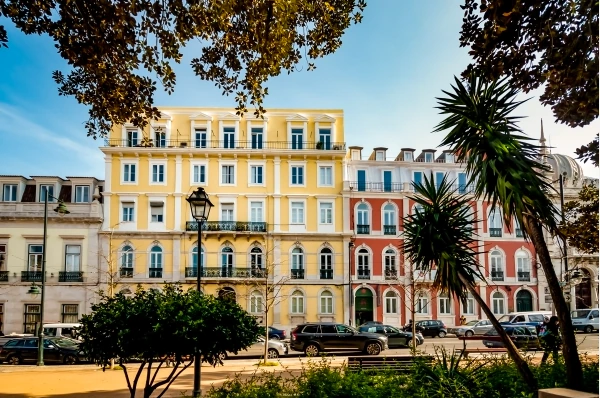
Like Lapa, Príncipe Real was born in an aristocratic context — the same nineteenth-century townhouses, the same long-established families — but over time, the two territories developed opposite relationships with that origin. Lapa preserves: its legacy remains alive, and many families have remained there across generations, preserving much the same relationship with the place. Príncipe Real transforms: the architecture remained, but its old townhouses gave way to galleries, ateliers, independent boutiques and an international community drawn to creativity and culture. Lapa holds the memory. Príncipe Real gives it a contemporary expression.
Not legacy or continuity, but the possibility of living somewhere that reflects one's own cultural identity — the feeling of being able to be oneself, without playing a part.
Moments of personal rather than family affirmation: decisions made individually or as a couple, often by those who value self-expression and a like-minded community more than inherited tradition.
Not tradition, but identity — a place that already feels like theirs before they live there. It is also one of the territories most sought after by a cosmopolitan European community, particularly French and British, connected to art and design.
This is not a quiet neighbourhood in the traditional sense. It is a lived-in one — residents, culture, tourism, cafés, galleries and restaurants coexist on the same street. After a year, those seeking a traditionally quiet neighbourhood may discover, too late, that they chose a context whose vitality is inseparable from its identity. After several years, those who remain no longer simply live in a neighbourhood — they gradually become part of a cultural community.
A sense of belonging that requires neither lineage nor tradition — only genuine affinity with what the place represents.
Quiet: those seeking, above all, silence and a withdrawn way of life are unlikely to be happy here.