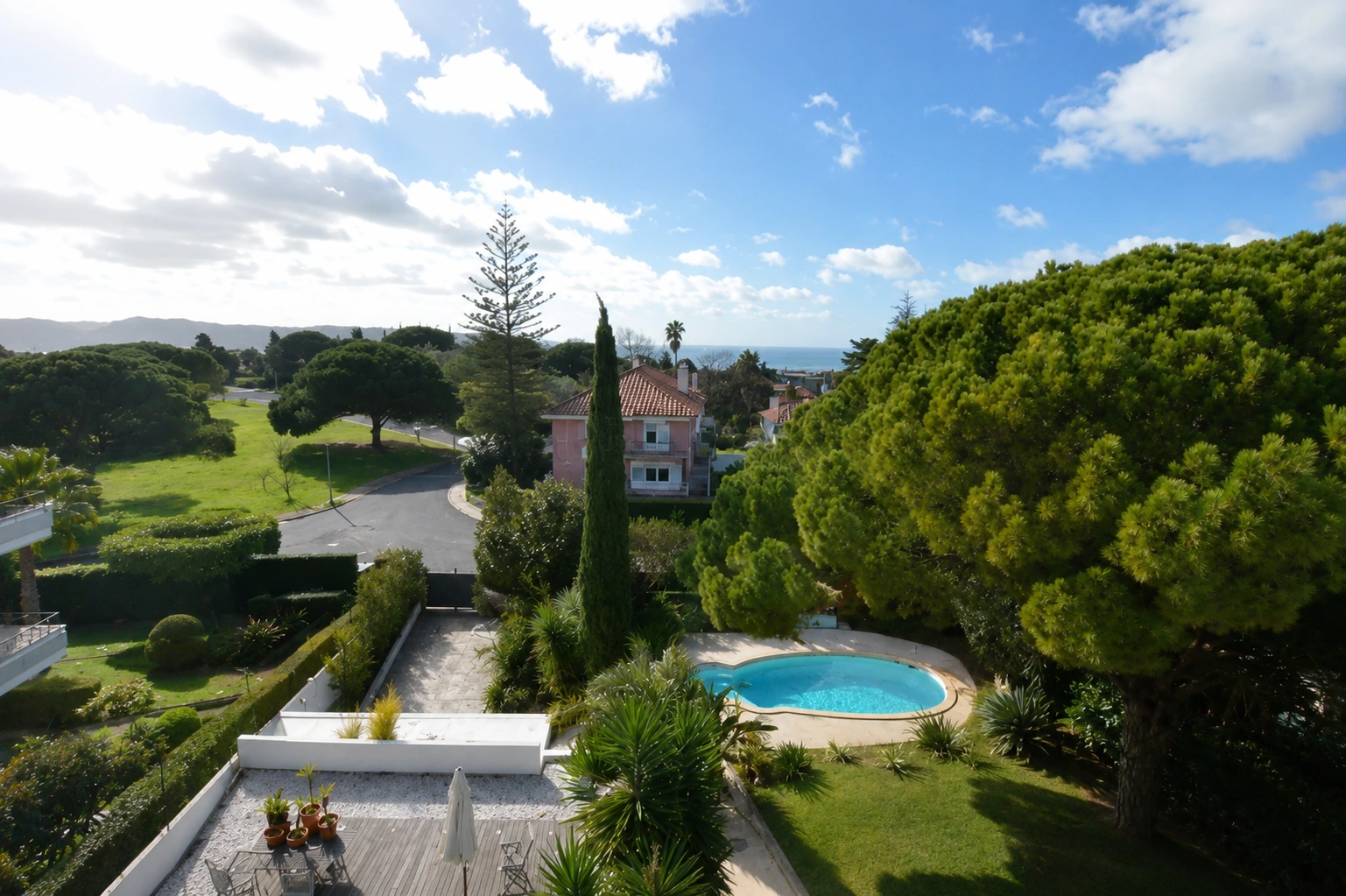
In the late 1930s, Restelo was conceived as a garden neighbourhood for a bourgeoisie of means, but without noble title — large villas, low density, broad streets, a model imported from the English garden city. Unlike Lapa, this was not an elite that needed to prove lineage. It was an elite that always knew, with discretion and without fanfare, that it had stability enough for a lifetime.
Space and predictability — trading centrality for room, without leaving the city. Not a fresh start, but the conscious expansion of a life already settled.
Family consolidation: children growing, the need for more rooms, a garden, a predictable routine, away from the unpredictability of the centre.
It is not simply square metres one seeks here, but an entire way of life — conservative in the best sense, averse to risk and exposure, where the stability of the family carries more weight than any appeal the city centre might offer.
A life at a slower, more predictable tempo, with room to breathe that no central apartment offers in quite the same way — but there is a tension rarely spoken aloud: those who grow up here frequently cannot imagine living in the centre, and if they were to try, they would find themselves no longer recognising the way of life to which they belong. It is as though the city grows at two different rhythms, each with its own sense of belonging. It is not a matter of physical distance. It is a matter of culture.
Space, predictability, and a coherent, stable identity — a way of living that requires neither explanation nor competition with the city centre to justify its worth.
The spontaneous proximity to urban life, and — for children who grow up here — a familiarity with this way of living so ingrained that the rest of the city may, in time, feel foreign.