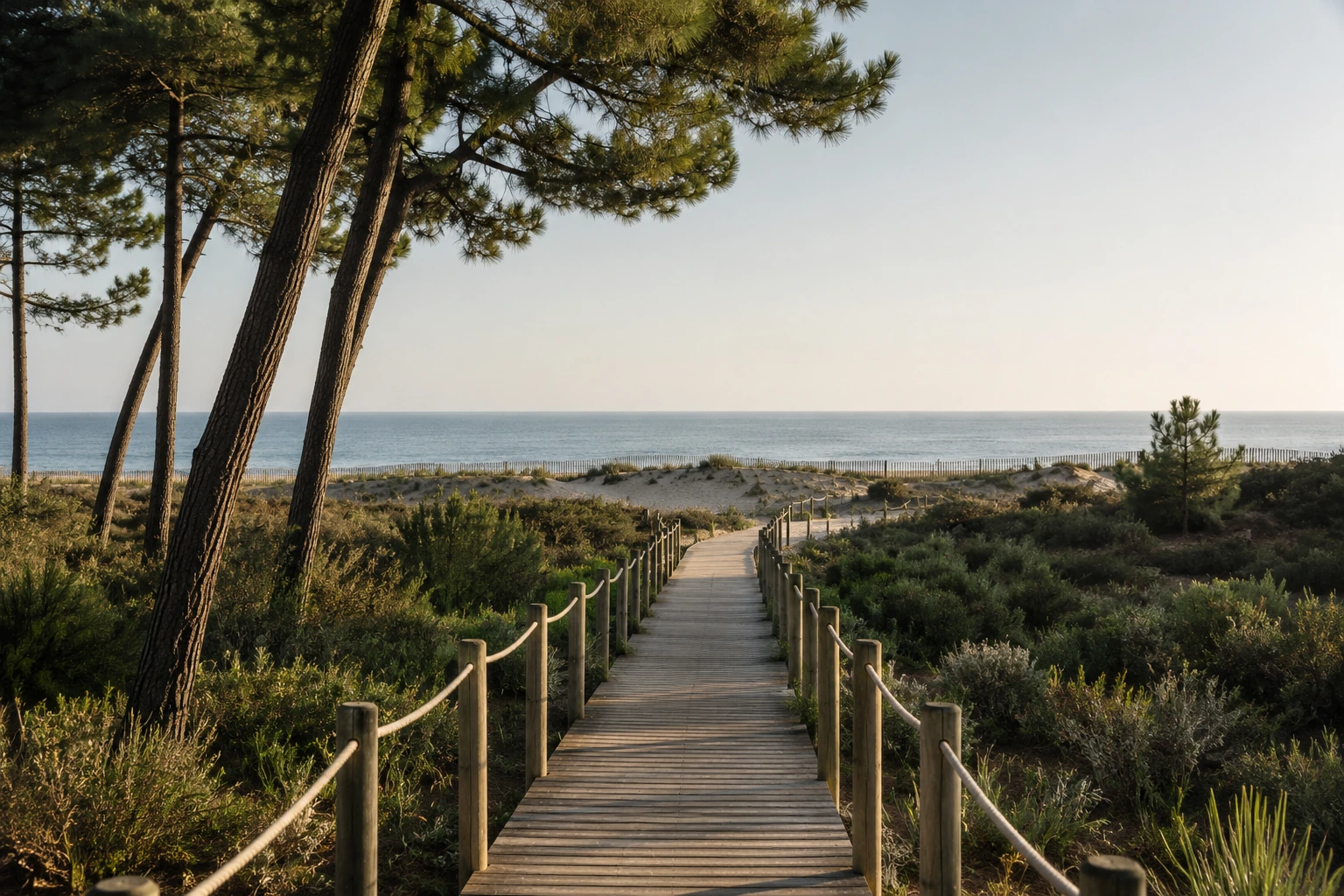
There comes a moment when one stops wanting to show what has been achieved, and begins to protect it. It is at that moment that Comporta and Melides cease to be merely a beautiful place and become a decision — a luxury that refuses to look like one, because those who choose it no longer need it to. Melides, more recent and more discreet still, is today the quiet counterpoint to Comporta — not a shadow, but another expression of the same search.
The need to recover what has been quietly lost — time, silence, the sense that days still belong to those who live them.
Moments when professional life has reached a pace one no longer wants to sustain year-round — not as escape, but as a way of returning to one's own life, differently.
Not isolation, but normality — walking by the sea without hurry, lingering over lunch, feeling that time belongs to them again. The simplicity of this architecture — rammed earth, thatch, few materials — is not scarcity. It is the mark of those who no longer need to be recognised by what they own.
Days shaped by light and tide, not by the diary — a community that recognises itself by affinity, not by title. There is no structured nightlife, no shopping centre, no rush: it is that absence, more than anything else, that draws those who have already had everything else.
Not a new life, but the protection of the life already built — the kind of capital that success, over time, also tends to erode without one noticing.
Those who seek immediate convenience, structured social life or proximity to urban services will not find them here — and the distance to Lisbon, seasonally greater on summer weekends, is a conscious choice, not a detail to overlook.